Managing expenses sounds simple until you actually have to do it every day.
There is the morning coffee, monthly bills, groceries, subscriptions, travel expenses, money you gave to a friend, and the expenses you paid on behalf of your family or roommates. Then there are group trips and events where everyone pays for something different.
A spreadsheet can handle some of this. Notes and WhatsApp messages can handle a little more. But after a while, it becomes difficult to remember where everything went.
That's where an app to manage expenses can make things much easier.
Instead of keeping expenses in different places, you can track them in one place, understand where your money is going, manage shared expenses, and keep a record of money you've given or received.
What Should an Expense Management App Actually Do?
There are plenty of apps that say they can help you manage money. But expense management isn't just about adding numbers to a list.
A useful app should make everyday expense tracking quick enough that you will actually use it.
At a minimum, look for these things:
- Easy expense entry
- Clear expense history
- Personal and shared expense tracking
- Budget management
- Contribution tracking
- Group expense splitting
- Simple settlement calculations
- Support for recurring expenses
- A way to keep track of money given or received
- Planning for trips, events, and other occasions
The important part is not how many features an app has. It's whether those features solve the problems you actually have.
Why Use an App Instead of a Spreadsheet?
Spreadsheets are useful, especially when you want complete control over your data. But they can become difficult to maintain when multiple people are involved.
Imagine you're managing expenses for a six-person trip.
One person pays for the hotel, another pays for fuel, someone else buys food, and you pay for tickets. Everyone needs to know their share at the end.
You can put all of this into a spreadsheet, but someone has to keep updating it, checking calculations, and explaining the final numbers to everyone.
An app to manage expenses can make this process much simpler.
Add the expense, select the people involved, and let the app keep track of the balances. Everyone can then see the information without depending on one person to maintain a spreadsheet.
Personal Expenses and Shared Expenses Are Different
One thing that often gets overlooked when choosing an expense management app is the difference between personal and shared expenses.
Your monthly mobile bill is your personal expense.
But the electricity bill for a shared apartment is different. So is a dinner with friends where one person pays the entire bill.
These expenses need different types of tracking.
A good expense management system should let you keep your personal expenses separate while also making it easy to manage expenses with other people.
This becomes especially useful for:
- Roommates
- Couples
- Families
- Friends
- Travel groups
- Small teams
Track Group Expenses Without Doing the Maths Yourself
Group expenses are probably one of the biggest reasons people start looking for an expense management app.
Think about a weekend trip with friends.
You might have:
- Hotel expenses
- Travel and fuel
- Food
- Tickets
- Shopping
- Activities
- Parking
- Other small expenses
Different people may pay for different things.
Trying to calculate everything manually at the end of the trip can quickly become confusing.
With an expense management app, you can record each expense as it happens and assign the appropriate people to it. The app can then show who contributed, who owes money, and what needs to be settled.
This is much easier than going through old payment notifications and WhatsApp messages after the trip.
Plan Expenses Before You Spend
Expense management shouldn't only start after you've spent the money.
Sometimes planning comes first.
You might be planning:
- A weekend trip
- A family vacation
- A birthday party
- A wedding event
- Festival shopping
- A family function
- A group outing
- A shopping plan
In these situations, creating a Plan before spending can help you keep the expected expenses organized.
For example, if you're planning a trip, you can think about hotel, transport, food, tickets, and other expected costs before you leave. As the trip happens, you can then add the actual expenses.
This gives you a much clearer picture of what you planned to spend versus what you actually spent.
Don't Forget About Money You Lend to Someone
Not every money transaction is a group expense.
Maybe a friend borrowed ₹2,000 from you.
Maybe you paid for something for your brother and expect him to pay you back.
Maybe you gave someone money and simply want to remember it until it is returned.
These transactions don't really belong inside your household budget or a group trip.
That's where a Personal Ledger or Khata Bahi can be useful.
Instead of trying to remember who owes you money, you can maintain a simple record of money given and received from individual people.
It's a small feature, but for many people, it solves a very common everyday problem.
Keep Bills and Warranties in One Place
Expense management isn't only about knowing how much you spent.
There are also documents and information connected to the things you buy.
Think about a new refrigerator, washing machine, laptop, phone, or other expensive item.
You may need the invoice several months later. You may also need the warranty information when something stops working.
Keeping bills and warranty details organized alongside your expense records can save a lot of time later.
Instead of searching through email, WhatsApp, paper receipts, or different folders, you have a dedicated place to find them.
What About Recurring Expenses?
Some expenses happen once.
Others come back every month or every week.
Rent, subscriptions, internet, electricity, maintenance, school-related expenses, and other regular payments can make up a significant part of your monthly spending.
An app that supports recurring budgets or regular expenses can help you keep track of these without having to create everything from scratch every time.
This is especially useful when you're trying to understand how much money you regularly need each month.
Choose an App That Doesn't Make Expense Tracking Feel Like Work
This is probably the most important point.
If recording an expense takes too many steps, you'll eventually stop doing it.
The best app to manage expenses is not necessarily the one with the biggest feature list. It's the one that fits naturally into your routine.
You should be able to open the app, add an expense, choose the relevant people or category, and move on.
The same applies to checking your expenses.
You shouldn't have to dig through multiple screens just to answer a simple question like:
"How much did I spend this month?"
Or:
"How much does my friend owe me?"
Or:
"How much have we spent on this trip?"
Simple questions should have simple answers.
How BudgPay Helps Manage Everyday Expenses
BudgPay is designed around more than just personal expense tracking.
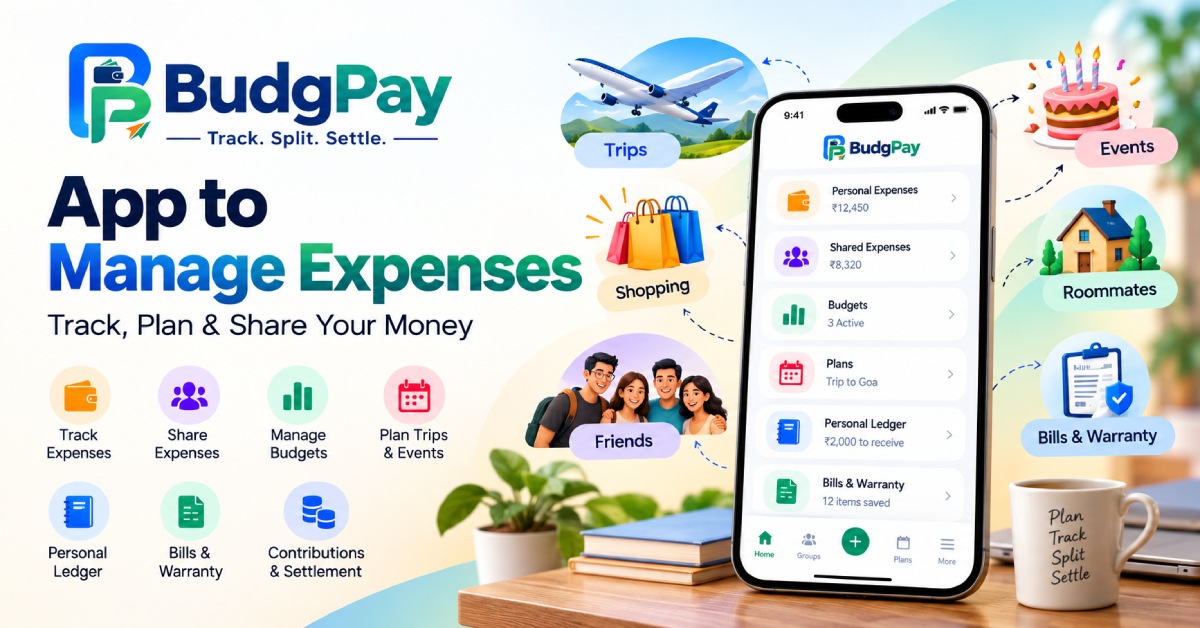
You can use it to manage personal expenses, shared expenses, group budgets, contributions, and settlements in one place.
For example, you can create a shared budget for your flatmates, family, friends, or a trip. Add expenses as they happen and keep track of who contributed and who needs to settle.
You can also use Plans to organize upcoming trips, events, shopping, festivals, family occasions, or other activities where you expect to spend money.
For money outside group expenses, the Personal Ledger (Khata Bahi) helps you keep track of money you've given or received from individual people.
BudgPay also includes Bills & Warranty, giving you a place to keep important bills, invoices, and warranty information organized.
The idea is fairly simple: instead of using a spreadsheet for one thing, a notes app for another, and WhatsApp messages to remember who owes whom, keep the important expense information together.
Is an Expense Management App Worth Using?
It depends on how complicated your expenses are.
If you rarely need to track expenses and usually know where your money goes, you may not need a dedicated app.
But if you regularly share expenses with friends or family, manage a household, go on group trips, plan events, lend money to people, or simply want a better record of your spending, an expense management app can save you a lot of effort.
The biggest benefit isn't necessarily saving money.
It's reducing the mental effort of remembering everything.
You don't have to remember who paid for dinner last week.
You don't have to search through WhatsApp to find an old expense.
You don't have to calculate a trip's expenses manually.
And you don't have to wonder where you stored that appliance invoice.
You can simply record it and come back to it when you need it.
Final Thoughts
Finding the right app to manage expenses comes down to how you actually handle money in everyday life.
If you only need basic personal expense tracking, a simple expense tracker may be enough.
If you regularly deal with roommates, family expenses, trips, events, shared budgets, or money lent to friends, you'll probably benefit from something that handles more than just personal spending.
BudgPay brings these different use cases together with shared expenses, group budgets, Personal Ledger, Plans, contributions, settlements, and Bills & Warranty.
Whether you're planning your next trip, splitting expenses with friends, managing household costs, or simply trying to keep your everyday money records organized, having everything in one place can make the process a lot easier.
Ready to Manage Your Expenses More Easily?
Stop relying on spreadsheets, scattered notes, and old WhatsApp messages to keep track of shared expenses.
Try BudgPay and manage your expenses, plans, budgets, contributions, and personal ledger in one place.
Download BudgPay
- Android: Download BudgPay on Google Play
- iPhone & iPad: Download BudgPay on the App Store
Plan. Track. Split. Settle.